
Juvenile Dependency
CPS defense and dependency-court representation for parents, relatives, and caregivers across Sacramento, Placer, El Dorado, and Amador Counties.
You are not alone
in this fight
Few things are more frightening than facing a Child Protective Services investigation. The fear of being misunderstood — or, worse, of being separated from your children — can be overwhelming.
Scharf Law, P.C. represents parents, relatives, and caregivers across Sacramento, Placer, El Dorado, and Amador Counties through the entire dependency process. We are here to defend your rights, make sure your side of the story is heard, and work toward keeping your family together.
The court process moves quickly. After a child is removed, you must attend a Detention Hearing almost immediately. The earlier you have a knowledgeable juvenile dependency attorney involved, the better positioned you are for every hearing that follows.

Stages of a dependency case
Dependency cases move through a defined sequence of hearings. We represent you at each one.
CPS Investigation
If a Social Worker has contacted you, what you say next matters. We help you understand your rights and respond before the case goes to court.
Detention Hearing
Once a child is taken into custody, CPS generally has 48 hours to file a petition. The detention hearing decides whether the child remains in protective custody.
Jurisdiction Hearing
The court considers whether the petition’s allegations are true by a preponderance of evidence and whether dependency jurisdiction applies.
Disposition Hearing
If jurisdiction is taken, the court decides the plan moving forward — including services, placement, and reunification objectives.
Reunification Services
We work to ensure your case plan is tailored to your family’s actual needs — not boilerplate — and that visitation is meaningful.
Permanency Planning
If reunification services are terminated, the court determines a permanent plan. We represent parents at every stage of this process.
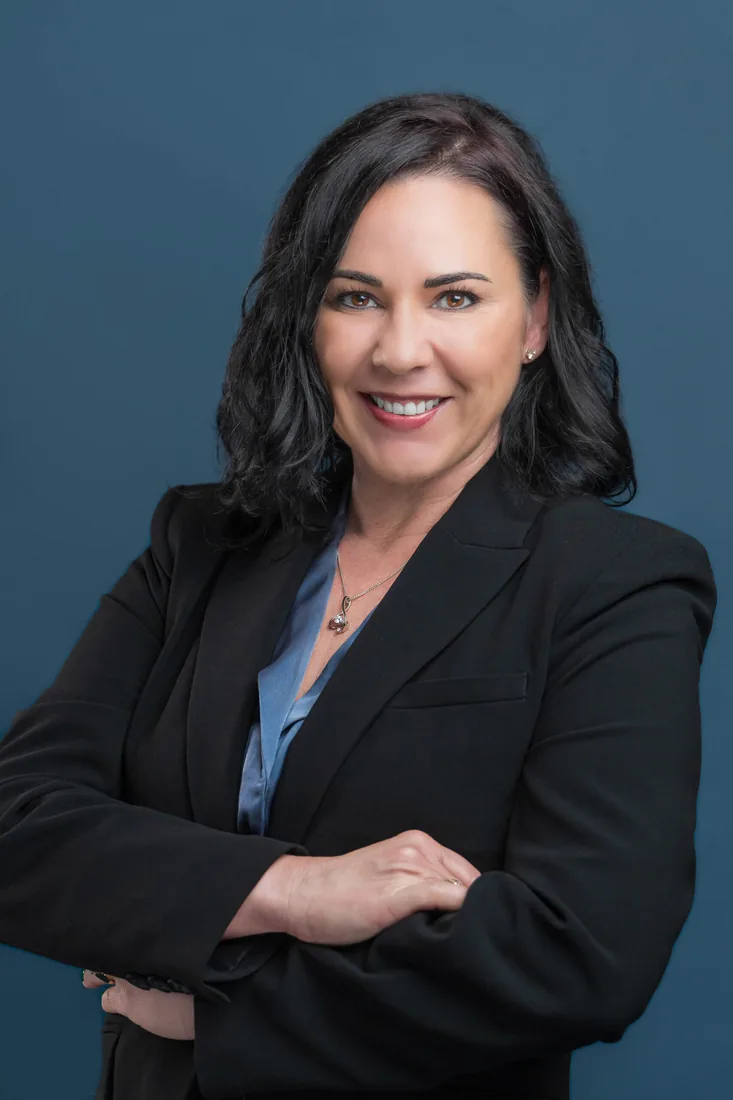
A practice rooted in juvenile dependency
Taryn Scharf’s career began in juvenile dependency — a foundation that today shapes how the firm approaches every family-law matter. Active member of the California State Bar (Bar #244097), admitted 2006.
Juvenile dependency requires familiarity with the Welfare and Institutions Code — particularly how evidence is admitted and how it differs from other fields of law. Our office defends parents and caregivers against allegations of abuse or neglect with thorough preparation and steady advocacy.
Standing with your family
Whether you are a parent, a caregiver, or a prospective adoptive parent, we provide skilled advocacy and clear guidance.
Parents Facing Allegations
Parents accused of abuse or neglect deserve a clear, prepared advocate at every hearing — from detention through permanency.
Relative & Non-Relative Caregivers
Grandparents, aunts, uncles, and family friends seeking placement of or visitation with a dependent child.
Foster Parents
Foster parents have valuable information about a child’s current needs. We help ensure their voice is heard in placement decisions.
Prospective Adoptive Parents
Guidance through the legal complexities of foster care placement and adoption when parental rights are terminated.
De Facto Parents
If you have been assuming a parental role, you may seek de facto parent status to gain legal standing in the case.
Non-Custodial Parents Seeking Placement
When a child is removed from one parent, the other parent often has the right to step in and seek placement. We help non-custodial parents navigate the process and assert their rights.

Across the region
Scharf Law, P.C. is based in Folsom and serves families throughout the greater Sacramento region.
Common questions about juvenile dependency and CPS cases
What is a juvenile dependency case?
A juvenile dependency case is a court proceeding under Welfare and Institutions Code Section 300 that begins when a county child welfare agency (CPS) files a petition alleging a child has been abused or neglected or is at substantial risk. The court decides whether to take jurisdiction, where the child will live, what services the parents must complete, and ultimately whether the family reunifies.
Do I get a lawyer in a CPS case?
Yes. Parents have a right to counsel in dependency proceedings under Welfare and Institutions Code Section 317, and the court appoints an attorney at the first hearing for parents who cannot afford one. Many parents retain private counsel earlier, during the investigation, because appointed counsel typically first meets the case at the detention hearing.
What happens at the detention hearing?
The detention hearing is the first court date after a child is removed and must be held by the end of the next judicial day after the petition is filed (Welfare and Institutions Code Section 315). The judge decides whether the child stays in protective custody, goes to a relative, or returns home, based on whether there is a prima facie case and a substantial danger to the child.
How long does a dependency case take?
Reunification services generally last six months for children under three at removal and twelve months for older children, extendable to eighteen months and rarely twenty-four (Welfare and Institutions Code Section 361.5). Review hearings occur at six, twelve, and eighteen months. If services end without reunification, a Section 366.26 hearing selects a permanent plan.
Can I get my child back?
Many parents do reunify, and the law prefers returning children home when it is safe. Reunification depends on completing the court-ordered case plan, consistent visitation, and showing the court the risk that led to removal has been addressed. Every case turns on its own facts; the earlier a parent has counsel and begins services, the more options remain open.
What is the difference between dependency court and family court?
Family court resolves custody between private parties, usually parents. Dependency court is a case brought by the county against the parents on behalf of the child, with the county, the child, and each parent represented separately. Dependency orders take priority over family court custody orders while the dependency case is open.
General information about California law, reviewed by attorney Taryn M. Scharf (CA State Bar #244097), Scharf Law, P.C., Folsom, CA. It is not legal advice for any specific situation. Ask about your case or call (916) 782-3900.
Facing a dependency case?
Don’t wait.
The earlier you have counsel involved, the better positioned you are at every hearing. Schedule a confidential consultation today.
Request a Consultation (916) 782-3900
Scharf Law, P.C. — 2330 E Bidwell St, Suite 110, Folsom, CA 95630-3897
— (916) 782-3900
Taryn M. Scharf, Esq. — CA State Bar #244097
This website is an advertisement for legal services. It is for informational purposes only and does not constitute legal advice. Viewing this website, submitting a contact form, or calling our office does not create an attorney-client relationship. Past results do not guarantee future outcomes. No outcome is guaranteed; every case turns on its own facts. Photographs other than those of the attorney and staff are stock images and do not depict actual clients. Privacy Policy
© 2026 Scharf Law, P.C. All rights reserved.
This website was designed & built by